How would anyone know? PART 2
In my last Artful Action, I shared an experience with faculty and staff at Southwest Wisconsin Technical College.
Again and again, I heard some version of:
“I had no idea I could fund THAT!”
They cared deeply about their students and their work. They had needs, ideas and dreams. What they didn’t necessarily know was how the Foundation could be part of making those dreams possible.
It got me thinking.
How would ANYONE know if we don’t TELL them?
And last week, I saw another side of that same lesson.
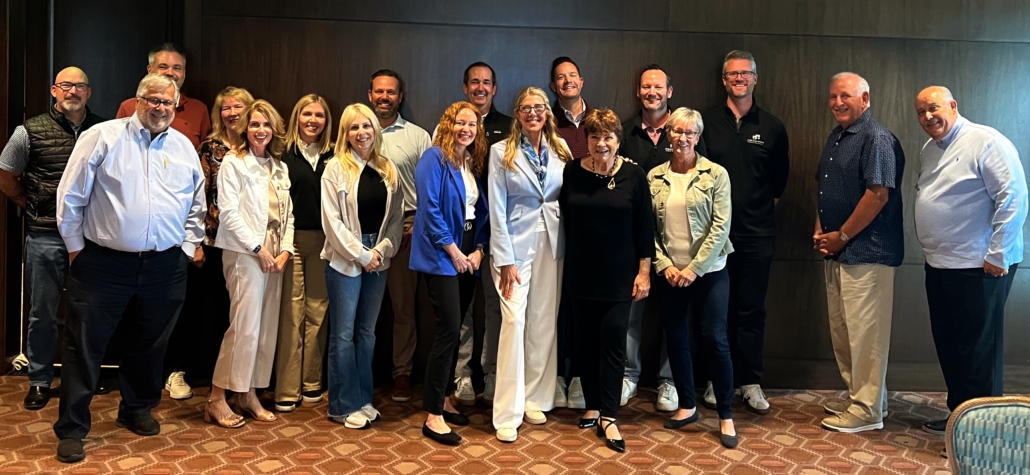 I spent time with 15 board members at Child Crisis Arizona. They were engaged. They connected with me — and, more importantly, it was abundantly clear how much they love Child Crisis Arizona and the children and families it serves.
These are not people sitting on the sidelines.
They actively invite people to events. They encourage friends and colleagues to come. Several talked about filling tables for upcoming events like Lunch for Love and the gala.
Then comes the question:
What happens next?
Getting someone to attend an event is wonderful.
But an event isn’t the end of engagement. It’s the beginning of an opportunity.
Who follows up?
Who says, “I’m so glad you came. What did you think?”
Who thanks someone who has supported Child Crisis Arizona in the past and invites them to reconnect?
Who shares another story about the impact?
Who simply says, “I’d love to tell you more about why this organization means so much to me”?
When I asked the board members what first step they would take after our session, Karilee Ramaley wrote: “Thank prior donors and invite them to re-engage in supporting CCA.”
YES!
Notice what she didn’t say.
“Ask them for money.”
She said thank them. Re-engage them.
That’s relationship-building.
Many of the board members also talked about the challenge of finding new people with whom to share Child Crisis Arizona.
And that was another important shift we experienced.
We don’t have to constantly be searching for some mysterious population of “new donors.”
We can grow our own new givers.
- Start with the people already around you.
- The person who came to your event.
- The former donor you haven’t heard from lately.
- The friend who keeps asking why you’re involved.
- The colleague who would genuinely be interested in your mission.
- The person who sat at your gala table last year.
Sounds good, but…… the board members raised another very practical challenge:
“What do we tell them?”

They love Child Crisis Arizona, but they don’t always know the latest stories about what’s happening there.
So, I suggested that their amazing CEO, Torrie Taj, send the board 3–5 quick bullet points each week — nothing fancy. Just a few fun, touching or meaningful things that happened at CCA during the previous week.
Their reaction was immediate.
YES!
That’s what they needed. Not another brochure. Not a perfectly memorized elevator speech.
Conversation starters.
“Here’s something wonderful that happened at Child Crisis Arizona last week…”
“I thought you’d love this story…”
“You won’t believe what one of our kids did…”
Those little stories give board members something authentic and current to share.
And here’s the important part:

The person listening doesn’t have to jump up and say, “YES! I’ll give!”
That’s not the point of every conversation.
Think of these as touches.
- A story is a touch.
- An invitation is a touch.
- A thank-you is a touch.
- A quick note saying, “This made me think of you,” is a touch.
Each one plants a seed. Each one helps someone know your organization a little better, care a little more and feel a little more connected.
That’s how you grow your own new givers — one small, genuine touch at a time.
Engagement isn’t about having hundreds of new names. It’s about doing something with the relationships you already have.
And sometimes the biggest barrier isn’t even time.
One board member wrote that TIME was her biggest obstacle to participating more in engagement and fundraising. After I led them through some mindset exercises and practiced asking empowering questions, she wrote:
“Why do I now have an abundance of time!?”
I laughed — and loved it.
Because sometimes what feels like a time problem is really an uncertainty problem.
What am I supposed to say?
What exactly is my role?
Am I expected to ask my friends for money?
What if I do it wrong?
When we simplify the role, something changes.
Katy shared that before our session she was uncertain about strategy and how to simplify the messaging around her role.
Afterward?
Energized and equipped.
That’s what we want for our board members, staff, volunteers — and ourselves.
Not pressured.
Not scripted into awkward conversations.
Not sent out with instructions to “go raise money.”
Equipped to share something they genuinely care about.
So here’s my challenge for you ALL.
Think of one person already in your world who could know your organization better.
Don’t begin with:
“How can I get them to give?”
Instead ask:
“What’s one small touch I can make this week?”
- A thank-you.
- An invitation.
- A story.
- A phone call.
- A question.
- A chance to see the mission firsthand.

They can’t engage with something they’ve never been invited into. And they can’t take the next step if we never help create it.
Every invitation matters. Every conversation matters. Every touch matters. Every step matters.

YOU MATTER – to me.
Shine On!
Invest in Joy!™